Seattle Bathrooms Have Character — Your Remodel Should Too
Seattle is not a one-size-fits-all housing market. A 1924 craftsman bungalow in Madrona has completely different bones than a 2018 townhouse in Capitol Hill or a 1960s ranch on the eastern slopes of Queen Anne. We’ve worked in all of them, and that range of experience matters when you’re pulling tile in a bathroom that hasn’t been touched since 1987 or coordinating permits through the City of Seattle’s Department of Construction and Inspections.
Bathroom remodeling in Seattle tends to surface older plumbing — galvanized pipe, cast-iron drain lines, original subfloor conditions that weren’t built for modern tile weights. We scope these things honestly at the start, which is why our projects don’t surprise clients mid-construction.
Why Seattle Homeowners Remodel Their Bathrooms
The Pacific Northwest climate is a factor few remodeling companies talk about plainly: moisture infiltration in older Seattle homes is real. Bathrooms in pre-1960 construction often have inadequate ventilation, tile set over wood lath, and window details that need updating before any cosmetic work makes sense. We address the building science alongside the aesthetics — proper exhaust fan sizing, moisture-resistant backer board, and window treatments that handle west-facing rain exposure.
Beyond maintenance-driven projects, Seattle homeowners remodel bathrooms to match the quality their kitchens already have, to accommodate multigenerational living with walk-in showers and grab bars that don’t look institutional, or simply because a renovation-ready home sells faster in this market.
What a Bathroom Project in Seattle Typically Involves
City of Seattle permitting applies to most structural changes, plumbing relocations, and electrical work — even in a bathroom. We pull permits as a matter of course; unpermitted bathroom work is a recurring headache in Seattle real estate transactions, and one we won’t put our clients in a position to deal with later. License ARIIDBL767NB.
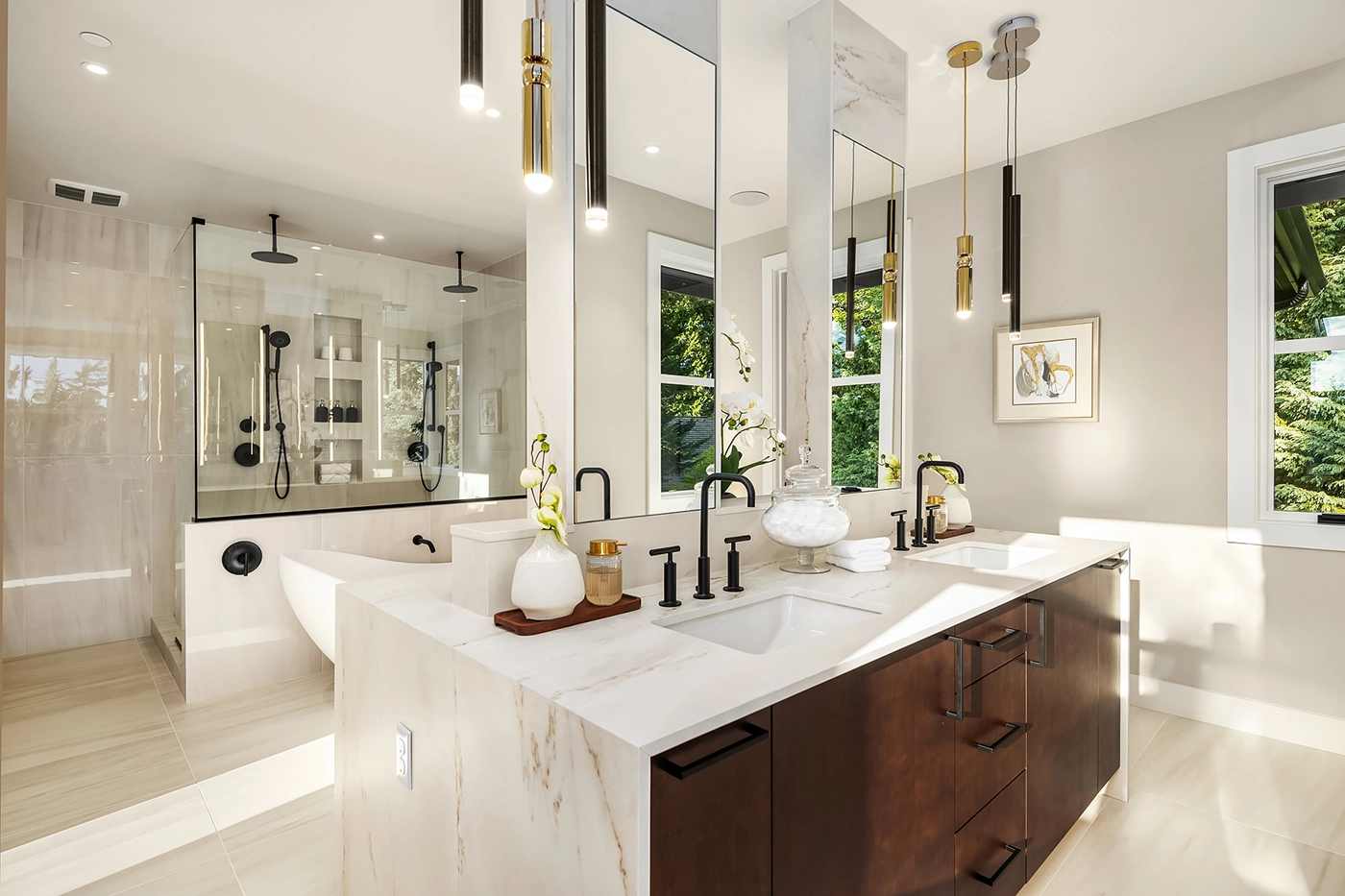
For full primary bathroom remodels in Seattle — typically 60 to 120 square feet — expect projects to run between $45,000 and $120,000 depending on fixture selections, layout changes, and existing condition of the substructure. Guest bath refreshes in the $25,000 to $45,000 range are common for homes in Laurelhurst and Madison Park where the primary is already updated but secondary baths still carry 1980s tile and builder-grade vanities.
Seattle Neighborhoods We Work In
North Seattle — Laurelhurst, Wedgwood, View Ridge, Sand Point, Windermere, Ravenna, and Bryant — is primarily 1940s through 1960s housing. These homes typically have original cast-iron drain lines, galvanized supply lines, and subway tile from the original build era. Full gut-renovations are common here because the bones are worth preserving; the plumbing and electrical rarely are.
The central neighborhoods — Capitol Hill, First Hill, Montlake, and Madison Park — range from 1910s Craftsmans to 1990s condominiums. Condo bathrooms in this corridor come with HOA approval requirements and building management coordination on top of SDCI permits. We handle both. Single-family homes in Montlake and Madison Park tend toward full primary suite renovations with material selections that complement historic architecture.
South Seattle neighborhoods — Beacon Hill, Columbia City, Mount Baker, Madrona, and Leschi — include a high proportion of mid-century properties and newer infill development side by side. Lakefront-adjacent properties along the western shore of Lake Washington carry higher water table considerations that affect tile substrate and waterproofing specifications. We factor this into scope from day one.
West Seattle — Alki, Admiral District, Fairmount, Arbor Heights, and High Point — trends toward post-war ranches and newer townhomes. These bathrooms often need full layout reconfiguration to make efficient use of the footprint. The ferry-commuter demographic here typically wants spa-quality primary baths and highly functional secondary baths that hold up to daily family use.
Seattle Permitting — What the SDCI Process Looks Like
The City of Seattle’s Department of Construction and Inspections (SDCI) requires permits for any bathroom work involving plumbing relocations, electrical changes, or structural modifications. Cosmetic-only work — swapping a vanity or replacing tile in the same footprint — typically does not require a permit. If you are touching drain locations, adding circuits, or reconfiguring a layout, a permit is required.
SDCI operates the Seattle Services Portal for permit applications and status tracking. Standard plan review currently runs four to eight weeks for residential bathroom remodels. Certain scope combinations — steep-slope overlays, properties in shoreline management areas, or work affecting load-bearing walls — may require a pre-application conference with SDCI reviewers before submission. We identify these situations during scoping, not mid-project.
Seattle’s Residential Energy Code (WSEC-R) imposes specific lighting efficiency requirements for bathroom renovations: high-efficacy fixtures are required wherever the scope triggers a lighting permit. We coordinate all permit types as part of the project workflow. License ARIIDBL767NB is on file with SDCI and with the Washington State Department of Labor and Industries.
Seattle Bathroom Remodeling: Frequently Asked Questions
Do bathroom remodels in Seattle require a permit?
Most do. The City of Seattle requires permits for plumbing relocations, electrical changes, and structural modifications — even within a bathroom. Cosmetic-only updates without plumbing or electrical changes may not require a permit, but we verify this before any work begins.
What does a primary bathroom remodel cost in Seattle?
For a full primary bathroom remodel in Seattle — new tile, fixtures, vanity, and shower or tub reconfiguration — expect to invest between $45,000 and $95,000 depending on finish level and layout changes.
How long does a Seattle bathroom remodel take?
A full primary bathroom typically runs 8 to 14 weeks from permit issuance to completion. Seattle permitting timelines vary, and we factor that into the schedule from the start.
Why choose ARIID for a bathroom remodel in Seattle?
We bring over 25 years of design-build experience and two National NKBA Design Awards to every project. Our team understands Seattle’s older housing stock and the SDCI permitting process well.
Ready to Start Your Project?
Call: (425) 679-2463
Book online: book.ariidgroup.com
ARIID Build & Remodel • Kirkland, WA • License ARIIDBL767NB
Contact us at inquiry@ariidbuild.com.
Looking for design guidance? Our sister firm Ariana Designs & Interiors specializes in material selection, color palettes, and creating spaces that reflect your personal style.
Related Pages